The Forces That Weaponize Your Pain
Jan 25, 2026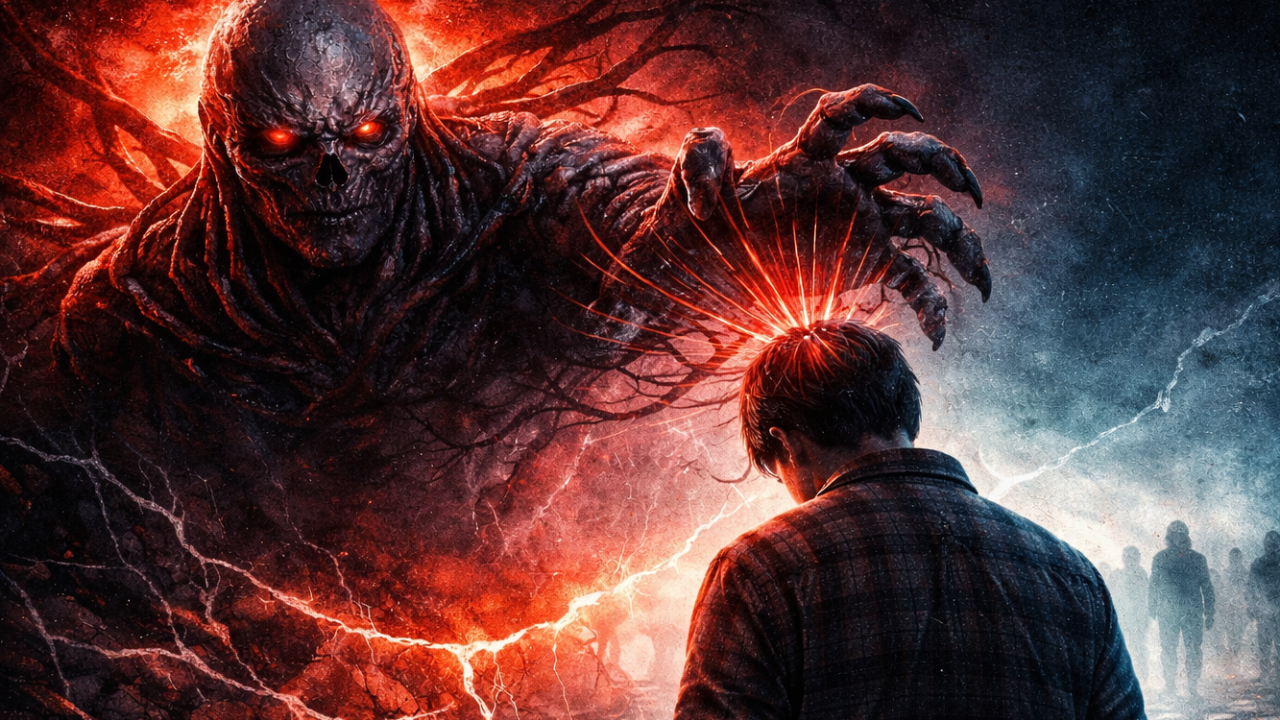
Read Time: 7 minutes
Rather listen? Check out the Mindless to Mindful Podcast
Lessons from Stranger Things on fear, power, and inner freedom.
I just finished watching the final season of Stranger Things. I know, I'm a little late to the party. But wow, I wasn't expecting to see a mirror of humanity. Quick heads up: if you haven't watched Season 5 and plan to, there are a few spoilers ahead.
One thing you may not know about me is that I find it really hard to watch shows or movies purely for entertainment. I'm always paying attention to the characters: their patterns, their choices, the way their inner world shapes what they do next. Years of studying communication, the subconscious, and human behavior have trained me to see what's happening beneath the surface, and this finale season, what stood out to me most wasn't the monsters or the spectacle. It was the tug of war between "good and evil," and how power actually worked in the story.
If you've never watched Stranger Things, here's all you really need to know: there's a very, very, bad guy named Vecna. And while he's terrifying to look at and has insane physical strength, he doesn't dominate people by force. He controls them psychologically. He studies their insecurities, their unresolved pain, their secrets… the parts of a person that live quietly in the background. The beliefs they've never questioned. The emotions they've never fully felt. The experiences they've buried instead of processed.
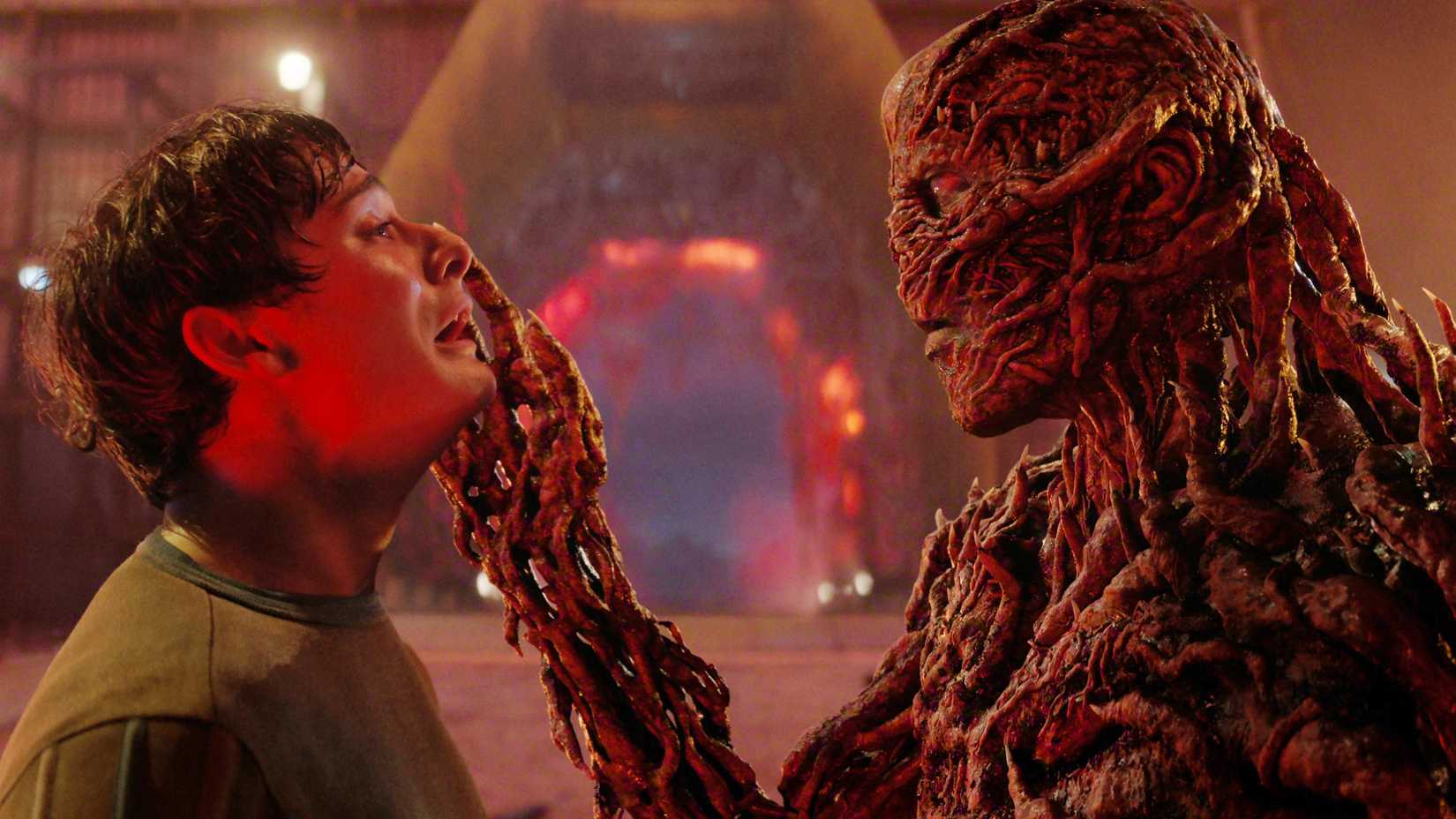
To me, Vecna represents the people, systems, and voices that weaponize our pain. And here's what makes him so dangerous: he doesn't always show up as a monster. Sometimes he appears as 'Mr. Whatsit' (his human form), who appears friendly, helpful, and trustworthy. Just like toxic relationships that start with charm. Fear-based systems that promise safety. Or our own inner critic disguised as 'self-improvement.' Vecna is a metaphor for anything that gains power by locating and exploiting the parts of yourself you haven't brought into the light.
As I watched season 5, I couldn't stop thinking about how much this mirrors the human experience. This is something I talk about often in my work: our inner world runs on a simple but powerful cycle.
What you believe shapes how you feel. How you feel shapes what you do. These cycles run like apps in the background, invisible but constantly shaping your reality.
When we aren't aware of the narrative happening in our own minds, we don't actually have power over our emotional state or the choices that follow.
This is why mindful communication isn't just about how you speak to other people. It's about how you speak to yourself. Because the thoughts and stories you repeat long enough stop being feelings and start becoming programs. Watching Stranger Things this season felt like a giant metaphor for what happens when those programs are left unchecked.
Your Unprocessed Emotions Become Entry Points for "Darkness"
One of the main protagonists is named Will Byers. If you've watched his character across the seasons, you've probably noticed that he's always been a little more emotional, a little more uncertain, a little more unsure of where he fits in. Over time, we watch him struggle with confidence and a quiet belief that something about him makes him less than.
So when Vecna tells Will that he chose him as his victim because he's weak-minded, it hits hard because it mirrors a story Will already carries inside himself. That's an important detail because Vecna isn't creating new wounds. He's exploiting the ones that already exist. And this is what happens in real life. When someone hurls an insult at you, it only stings if some part of you already believes it.
At this point in the story, Will is also carrying a secret: he's gay. And he fears that if he tells his friends and family, they will not love him anymore. Vecna uses that fear to show Will a vision of his future where, once the truth comes out about him being gay, everyone he loves pulls away. His friends create distance; they stop talking, and Will ends up alone.
The voice narrating that future isn't just Vecna's. It's the same inner voice Will has been listening to for years. And as long as that voice remains unquestioned, Vecna has leverage. Because secrecy creates separation. We all have that inner voice, those gremlins that sew fear inside of us. Then there's a separation between who you are and who you think you need to be to stay safe and accepted. That split in your mind creates a crack in your foundation, an unlocked doorway, where the Vecnas of the world can slip in.
What's powerful is that Will eventually realizes all this, how Vecna is able to control people through their fears, insecurities, and secrets. So, he decides to do something brave, come out to his friends and family. To his pleasant surprise, he is met with love, empathy, and compassion, which eradicates all the fear that was possessing him.
That's the moment everything changes in Will’s story. Not because the world suddenly becomes safer, but because Will's inner world does. The stories and beliefs that once lived rent-free inside his mind lose their power. And without that story, Vecna loses his control over Will.
We see this same pattern play out with another character: Jim Hopper.
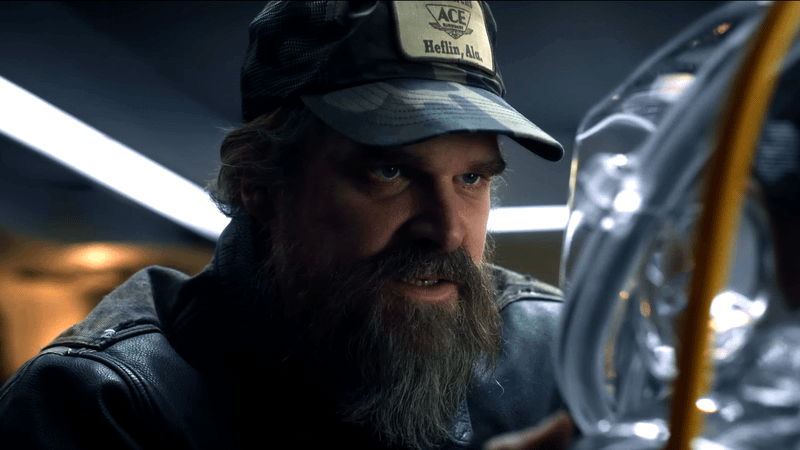
Hopper's story looks very different from Will's, but the mechanism is exactly the same. Where Will is vulnerable through secrecy and shame, Hopper is vulnerable through his unprocessed grief. He lost his daughter to cancer many years ago, but never fully dealt with his grief.
Vecna knows this.
So he attacks Hopper's deepest fear: losing Elle (who is like a second daughter to him). Vecna uses his dark magic to create an illusion that makes Hopper believe that Elle is in danger, knowing that Hopper's instinct (survival mode) to protect Elle will override his ability to stay grounded in reality. Because Hopper never processed his daughter's passing, his grief has turned him into an overbearing protector, giving him a false sense of control. He is convinced that if the team doesn't follow his plan, his way of doing things, something bad will happen to Elle.
Eventually, Hopper is forced into a reckoning he's been avoiding: Elle is no longer a child, and he cannot protect her from everything. He must trust her to make her own choices, even if those choices carry the risk of loss. In doing so, he finally completes a part of the grief cycle so many of us avoid: radical acceptance. The irony is that by trying to protect Elle from experiencing any danger, he was actually keeping himself from healing. Control was his way of avoiding the grief he never processed.
These characters’ stories mirror the human condition. And what's true for individuals is also true for the collective. When entire groups of people are running on unexamined fear, the same dynamics play out on a much larger, more dangerous scale.
The Programs We Carry Inside of Us
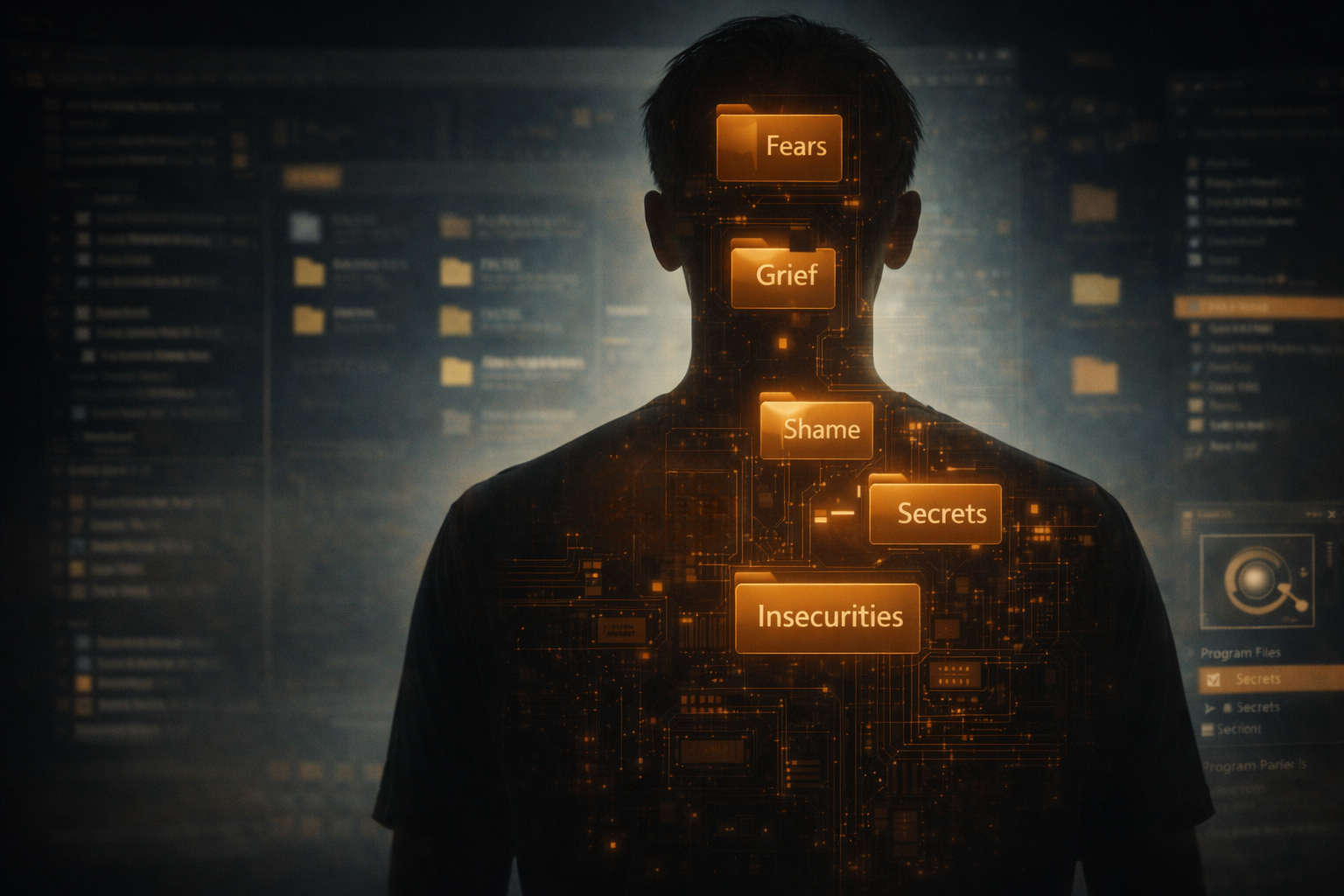
In my line of work, I've watched these stories play out over and over again. Different people, same patterns. As humans, we all carry internal programs shaped by our earliest experiences and what we learned in order to survive. I think of these as dormant programs on a computer. They exist in all of us, regardless of background or belief system. Some get installed early. Some live quietly on the hard drive, rarely noticed. Some run so consistently that we forget they aren't actually who we are.
Will's story highlights the program around shame, belonging, and fear of abandonment. Hopper's shows unprocessed grief, loss, and control disguised as love or protection. But those aren't the only ones. These core programs can also show up as fear of rejection, trust issues, or a constant sense of not being good enough.
What matters is whether you're aware of the programs running in the background — shaping your nervous system, your thoughts, your automatic responses. Because when these programs run unconsciously, they don't just influence how you think and feel. They shape your entire life. And just like we saw with Will and Hopper, whatever remains unseen inside of us quietly becomes an entry point for "dark forces."
This is the moment to pause and ask yourself, not with judgment but with curiosity:
-
Where do my emotions seem to take over before I can think clearly?
-
Where am I trying to control outcomes, hide parts of myself, or avoid looking at something uncomfortable?
Awareness alone doesn't fix these patterns. But it does begin the process of getting your power back from “Vecna.”
When Fear Becomes Collective
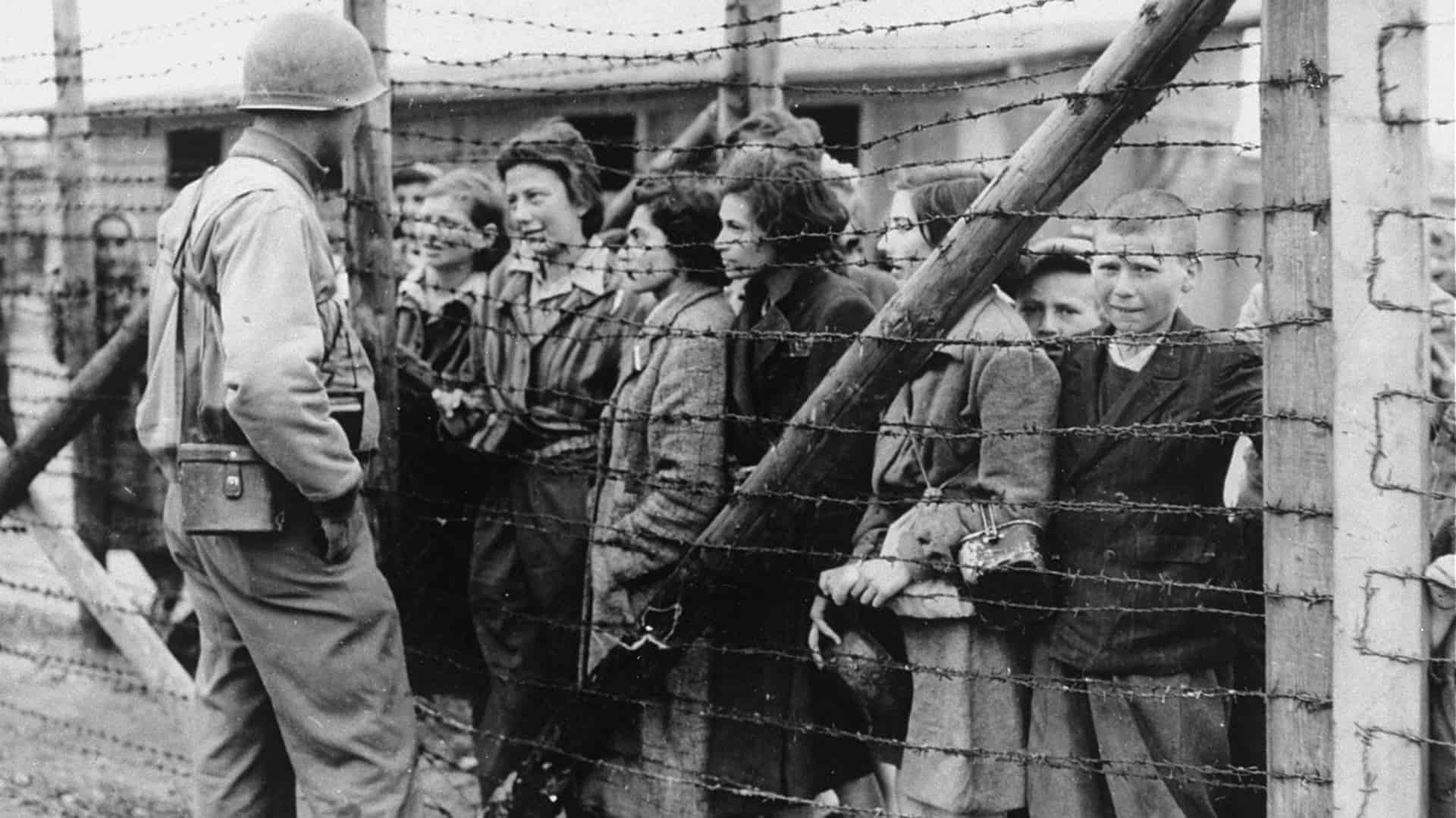
When fear rises collectively, people become reactive. They narrow their thinking. They cling harder to certainty. They look for something (or someone) to make them feel safe again. And in these moments, discernment often gives way to survival.
History shows us this over and over again. From the Holocaust, to slavery, to wars justified in the name of “safety, order, or righteousness.”
Large-scale harm rarely begins with overt violence or obvious evil. It begins with fear. With uncertainty. With insidious stories that simplify complex realities into something easier to digest. It begins when people outsource their inner power in exchange for the promise of “protection or control.” Not because they are bad people, but because fear constricts our perception of reality.
We're living in a moment right now where many people feel deeply unsettled about the state of the world. There's political division, social tension, economic instability, and a constant stream of information designed to keep our nervous systems in a state of survival. When fear is this palpable, people accept things they would have questioned in calmer times, often without realizing they are participating in something they don't fully agree with.
This is how, as a collective, our "entry points" take form for the Vecnas of the world to exploit.
By "Vecnas of the world," I don't mean a single villain. I mean any person, system, or institution that benefits when people are disconnected from themselves, emotionally hijacked, and operating on autopilot. I'm talking about the very real ways that fear-based messaging (whether from media, politics, or even well-meaning institutions) can exploit our unprocessed emotions and keep us in reactive states. These forces don't need to create fear. They only need to locate it inside of you, amplify it, and keep it unresolved.
Just as we saw with Will and Hopper, the issue isn't fear itself. Fear is human. The issue is unexamined fear. The things we bury that then drive behavior from the shadows. On a collective level, this behavior can look like dehumanization, polarization, blind allegiance, and the slow erosion of empathy and nuance.
So if this is how fear works, individually and collectively, what do we do about it?
Reclaiming Your Power
So, where does this leave you and me? Not with the responsibility to fix the world. Not with the pressure to stay hyper-vigilant or perfectly informed. And not with the illusion that you can control what happens outside of you. It leaves you with something far more powerful: agency.
The goal isn't to eliminate fear, as I said earlier, fear is part of being human. The work is to become conscious of where fear is in the driver’s seat. To notice where you're reacting instead of responding, and where old programs are shaping your thoughts, emotions, and behaviors without your consent. Because what you're willing to look at inside yourself can no longer be used against you.
This is what it means to live from inner mastery. To reclaim your inner authority. To stay grounded in your body and your values. To exercise discernment, even when the world feels uncertain (especially when it does). Inner work isn't for the faint of heart, but it is for those who want ownership over their life.
When you're aware of where the cracks are in your foundation, you're less likely to give your power away. You become less reactive and less available to narratives designed to hijack your mind. In their place, you gain the capacity to respond with clarity and compassion.
As researcher and author Brené Brown teaches, shame thrives in secrecy, silence, and judgment—but it cannot survive empathy. And that's the quiet truth at the heart of all of this: what we bring into the light can no longer control us from the shadows.
Call me crazy, but I believe this is how we change the world. Not through force. Not all at once. But one conscious human at a time, choosing to face what lives in the shadows so it no longer has power in their life.
So I'll ask you again: Where are your entry points? What fears are you carrying that you haven't fully looked at? What stories are keeping you small and powerless?
The Vecnas of the world are counting on you not to ask these questions. But if you read this far, you just did. May the reclamation of your power officially begin.
When You're Ready to Go Deeper, Here's How We Can Work Together: