A Berkeley Psychologist Has Been Studying This Feeling for Decades. Bad Bunny Just Gave 128 Million People a Live Demonstration.
Feb 12, 2026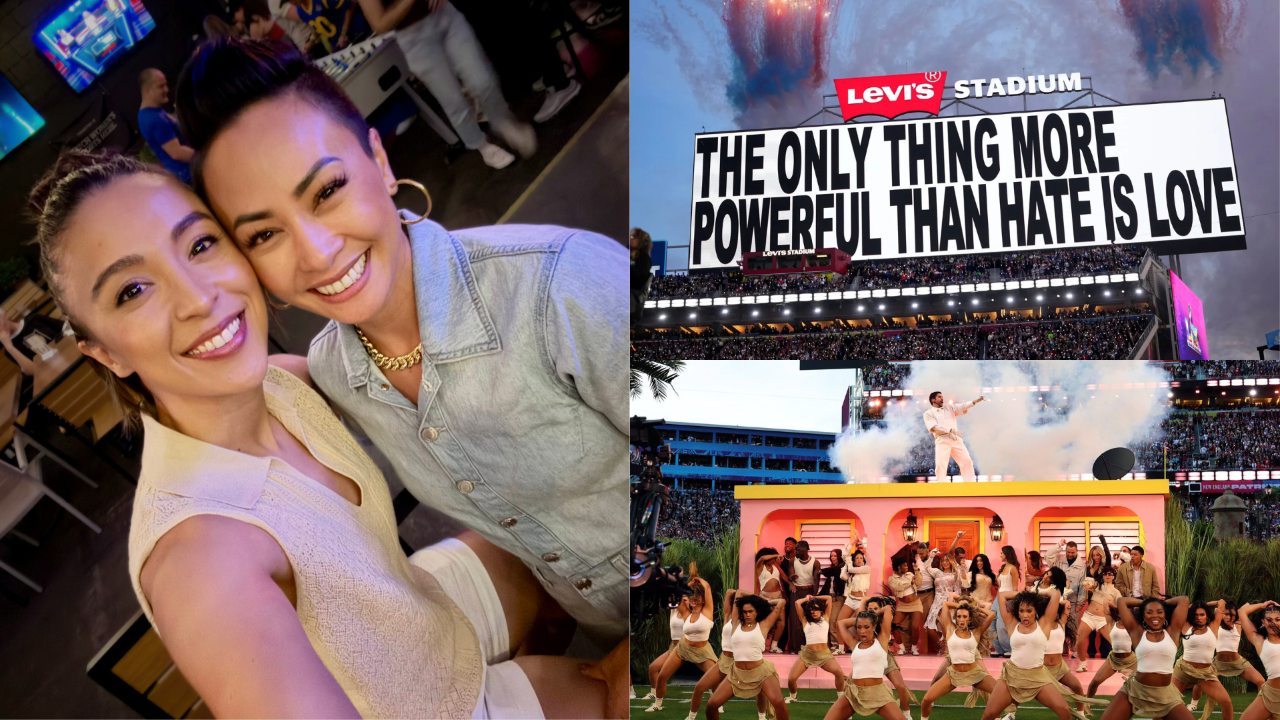
While sitting on my couch Sunday night for the Super Bowl, I was expecting to have a little dance party during Bad Bunny’s halftime performance, but I wasn’t expecting to feel so emotional. I identify as Mexican-American. A woman. I’m also part of the LGBTQ+ community. Oh, and one more thing, I don’t speak Spanish.
That last part has carried more weight than most people realize. Growing up, I was never quite white enough for the white kids and never quite Mexican enough for the Latino kids because I didn’t speak Spanish. Therefore, I never really felt “at home” in either part of my identity; it was a lonely in-between place to grow up in.

Photograph by Kathryn Riley / GettyPhotograph
So when Bad Bunny took the stage at Super Bowl LX and performed his entire set in Spanish (again, a language I don’t speak), I wasn’t expecting it to land as hard as it did. I kept asking myself, what was it about his performance that was making me feel so seen? Proud? Joyful? Hopeful?
What I discovered as I unpacked my own experience brought me back to the work of UC Berkeley psychologist Dr. Dacher Keltner, who has spent decades studying the science of “awe.” Revisiting his research gave me the language for what I (and millions of others) experienced on Sunday night.

Joe Raedle / Getty Images
What Is Awe — And Why Did This Feel So Big?
Dr. Keltner describes awe as the emotion we feel when we encounter something so vast it stretches our understanding of the world. It arises through two psychological processes:
-
Perceived Vastness — experiencing something larger than ourselves.
-
A Need for Accommodation — the mental expansion required to make sense of it.
Sometimes the "vastness" is experienced by standing at the edge of the Grand Canyon or looking up at the stars. Sometimes it's being at a concert and letting the music take you. And sometimes it's human courage on full display.
Keltner’s research found that one of the most powerful sources of awe is people. He calls it moral beauty — the emotion we feel when we witness human courage, self-sacrifice, altruism, justice, compassion, or integrity. It’s what happens when someone (Bad Bunny in this case) stands in their truth so fully that it inevitably expands yours. It has this transcendence quality, witnessing something so human it feels almost sacred.

Elizabeth Floes / The Minnesota Star Tribute
Moral beauty rearranges us on the inside. We often feel it in our body before we understand it in our mind. Sometimes that looks like tears welling up in your eyes, goosebumps on your arm, a tightness in your chest that feels like pride and grief at the same time. And it often produces a desire to act more ethically or courageously.
Keltner’s research shows that moments of awe, especially moral beauty, quiet the part of the brain where our EGO lives, the voice that’s constantly narrating “who I am,” “where I belong,” and “what I’m not enough of.” And in its place, something else emerges: A sense that you’re part of something larger than yourself. That you belong to a story bigger than your individual biography. One of their most important findings was that moral beauty helps reinforce social cohesion, something our world could desperately use right now.

What Bad Bunny Built Was Not a Halftime Show
It was a love letter to humanity. To anyone who has ever been told they don’t quite belong. The performance opened with sugarcane fields. Puerto Rico’s agricultural roots, the legacy of colonialism, and the labor of generations. Before a single word was sung, he was saying: I know where we came from. I’m not going to hide it or forget it.

Ishika Samant / Getty Images
He then climbed an electric pole and performed “El Apagón” (The Power Outage), the track is a criticism of the Puerto Rican and U.S. government’s negligence of the outdated electrical grid. While I couldn’t understand the words at the time, I knew that Puerto Rico had experienced severe power outages during natural disasters. Bold of him to highlight that pain point during the performance.

Then there was the moment of him handing one of his Grammys to a younger version of himself, which made me both hopeful and sad. Reminding me of all the ways my inner child didn’t have someone who looked like her doing the things she aspired to do. But happy for all the children who were watching themselves be represented on stage right now.

Kevin C Cox / Getty Images
Remember that wedding you saw? Yes, it was a real wedding. How beautiful to include that in the performance, one of the most universal symbols of celebrating love. And as Bad Bunny made his way through the wedding reception, he woke up a child sleeping on a makeshift bed, a few chairs pushed together. Something I remember seeing at my own family parties growing up, little cousins napping while loud music and laughter continued in the background.


Getty Images
And then we were all surprised to see Ricky Martin appear, which made me think about something I hadn’t before. A generation ago, he was the “it” guy, but the cost of admission was different in the late 90's. He made his album in English, was not out as a gay man, and essentially morphed into what was “acceptable” to a mainstream American audience. But Sunday night, watching him sing in Spanish at the Super Bowl made me smile. Watching him on one of the biggest stages as his authentic self. It felt like Bad Bunny was paying tribute to another Puerto Rican artist who paved the way for all he has been able to do.

But I think one of the most pivotal moments of moral beauty came near the end. He said, “God Bless America,” his only words in English during the entire performance, and then began naming every country in Latin America, South America, Central America, and North America. Every single one. As a billboard behind him lit up and said: “The only thing more powerful than hate is love.” That message wasn’t new. A week before the Super Bowl, after winning the Grammy for best Música Urbana Album, Bad Bunny said,
“Before I say thanks to God, I’m going to say ICE out. We’re not savages, we’re not animals, we’re not aliens, we are humans and we are Americans. The hate gets more powerful with more hate. The only thing that is more powerful than hate is love. So we need to be different. If we fight, we have to do it with love. We don’t hate them. We love our people. We love our family, and that’s the way to do it with love. Don’t forget that, please. Thank you.”
So to see him double down on that message during a time of intense political divide, violence, and injustice against immigrants, I was speechless. I didn’t need to speak Spanish to understand the courage he was embodying or the unity he was inviting.
Moral Beauty Is an Invitation, Not Just a Feeling
Here’s what I keep coming back to in the days since Sunday. Keltner’s research shows that awe doesn’t just feel good, it changes us. People who regularly experience awe are more curious, more generous, more connected, and less consumed by self-focused anxiety. Moral beauty, specifically, activates what researchers call “pro-social” behavior. We become more inclined to show up for others. More willing to take up space and make space for others at the same time.
But here’s the part I don’t want you to miss, awe is not meant to be a passive experience. Moral beauty is asking us something. Two questions, actually.
-
When was the last time you witnessed it?
-
And when was the last time you embodied it?
Because what Bad Bunny did on Sunday was courageous in the way that matters most — he showed up as his authentic self, in his own language, in a room full of people and a political climate that had loudly questioned whether he belonged there at all.
That kind of courage doesn’t only live on Super Bowl stages. It lives in your everyday life. In the difficult conversation you’ve been avoiding. The truth you keep diluting so that other people feel more comfortable. The part of yourself you haven’t introduced yet because you’re not sure it will be welcome.
And that little girl I was telling you about, who felt like she never quite fit in anywhere? Well, she got to be part of something vast on Sunday night. Not because she earned it or finally learned the “right language.” But because moral beauty doesn’t ask for prerequisites, it just opens the door and asks, “Are you willing to walk through? And once you do, are you willing to hold it open for someone else?”
I hope so, I'll be waiting for you on the other side :)

When You're Ready to Go Deeper: